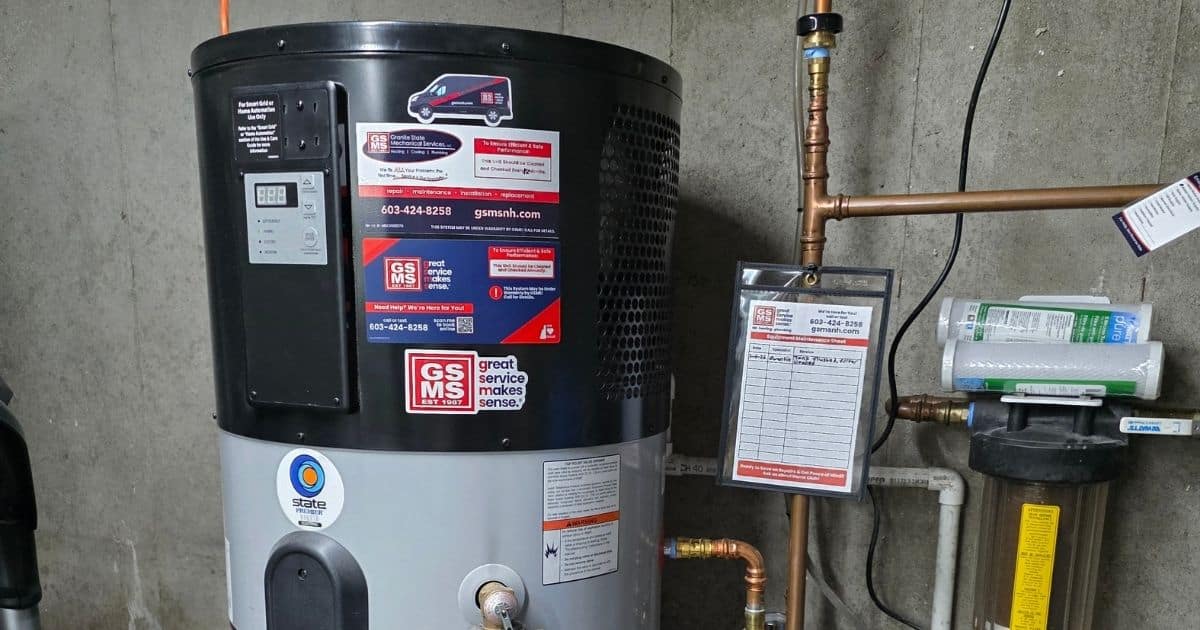
How they work, the rebates, and whether it’s right for your home
Hot water is one of those things you never think about, until the shower runs cold. But here's something most New Hampshire homeowners don't realize: heating water is usually the second-biggest energy user in your home, right behind heating and cooling the air. So the water heater quietly sitting in your basement has a real say in your monthly bills.
That's exactly why heat pump water heaters (sometimes called "hybrid" water heaters) are getting so much attention right now. They're dramatically more efficient than the standard tank you probably have today, and thanks to NHSaves and the new NEHPA rebates, switching is more affordable than most folks expect. Here's the honest rundown.
What is a heat pump water heater?
A traditional electric water heater makes heat from scratch, like a giant version of the coils in a toaster. A heat pump water heater works completely differently: instead of creating heat, it moves it, pulling warmth out of the surrounding air and transferring it into the tank.
If that sounds familiar, it should. It's the same principle behind the ductless mini-split heat pumps we install for home heating and cooling — just pointed at your water instead of your air. And because moving heat takes far less energy than generating it, a heat pump water heater can be up to four times more efficient than a conventional electric, propane, or oil model.
More hot water, a lot less energy. That's the whole pitch,and it's a good one.
Why New Hampshire homeowners are making the switch
A few reasons this is catching on around here:
- Lower energy bills. That 3–4x efficiency shows up on your utility statement month after month.
- A long, low-maintenance life. Most units last 10–15 years with annual flushing maintenance (included for free for Home Club members!)
- Rebates that close the gap. This is the big one for NH. The NHSaves® program — run by Eversource, Liberty, NH Electric Co-op, and Unitil offers rebates on qualifying heat pump water heaters. You can see the NHSaves current offers and the NEHPSA instant rebate offer for $300 off heat pump water heaters.Between the rebate and the energy savings, the math works out a lot faster than people assume.
What to know before you buy
A heat pump water heater isn't a one-size-fits-all swap, and the right setup matters. Here's what we walk every homeowner through:
Tank size
When upgrading to a high-efficiency hybrid water heater, we typically recommend choosing a larger tank than your current setup. Because hybrids efficiently pull heat from the air, they heat water more slowly than traditional tanks. Upsizing gives your home a larger buffer of hot water for high-demand times, which prevents the system from relying on expensive backup heating elements and ensures you maximize your energy savings.
Location
These systems need a bit of space to function correctly—usually a room with 8-foot ceilings and a footprint of about 8 by 12 feet. Basements and spacious utility areas work best. If your space is cramped, ducting is often a smart workaround. During our humid NH summers, the unit actually acts like a dehumidifier, which is a nice bonus; just keep in mind the surrounding air will feel a little crisper in the winter. We'll check those minimum clearance requirements during our visit to ensure your new heater has plenty of room to "breathe."
Drainage
Here's the part people don't expect: because a heat pump water heater pulls heat out of the air, it also acts a bit like a dehumidifier and produces condensation. That means it needs proper drainage, a nearby floor drain, or a sump pump to run safely and reliably.
Electrical
Some models run on 240 volts, others on 120. It's worth confirming what your panel can handle before you fall in love with a specific unit, something we check as part of every estimate.
If that list feels like a lot, don't sweat it. Sorting out sizing, placement, and electrical is exactly what we do on a visit.
Getting the most out of your heat pump water heater
Once it's in, a few simple habits keep it running at its best:
- Set it to 140°F. That's the sweet spot for comfort, safety, and efficiency.
- Run it in "Hybrid" or "Energy Saver" mode. This leans on the efficient heat pump and only calls on the backup electric element when it's really needed.
- Use "Vacation Mode" when you're away. No sense heating water for an empty house.
- Spread out your hot-water use. Back-to-back laundry, dishes, and showers can force the unit into less-efficient backup heating. A little spacing keeps it humming.
Most newer models also include Wi-Fi, so you can check energy use or tweak settings right from your phone, handy, and kind of fun.
Simple maintenance (and when to call a pro)
The upkeep is genuinely minimal:
- Clean the air filter every 6–12 months.
- Flush the tank every 12 months.
- Glance at it now and then for standing water, odd sounds, or error lights.
- Keep the area around it clean and clear so it can breathe.
That said, call in a professional if you run into any of these:
- No hot water at all. (Not sure where to start? Our guide on what to do when you have no hot water walks you through the first checks.)
- Frequent error codes or visible water leaks.
- The unit is running constantly or making loud or irregular noises.
When it's time for a fix, our water heater repair team has you covered.
Thinking about a heat pump water heater? GSMS can help
We've been keeping New Hampshire homes comfortable since 1987, and as an NHSaves contractor, we can help you choose the right heat pump water heater, handle the installation the right way, and make sure you take full advantage of the rebates available to you.
Curious whether one's a good fit for your home, or just want to talk through tank vs. tankless vs. heat pump? That's our favorite kind of conversation. Take a look at our water heater replacement services, then call us at 603-424-8258 or reach out online. Great service makes sense — and so does a smarter water heater.