
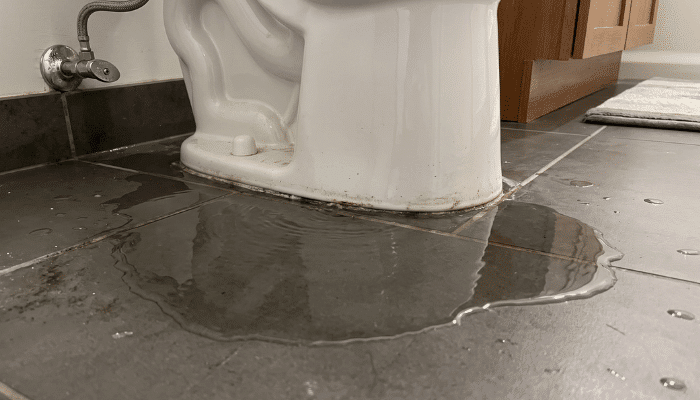
Quick answer: Water at the base of a toilet most often means the wax gasket, the seal between the toilet and the drain, has failed. Sometimes the cause runs deeper, like a cracked or sunken toilet flange or a problem with the floor underneath. It is not usually an emergency, but it should not wait, because water working under the toilet can rot your subfloor. The fix is to pull the toilet, replace the seal, and reset it, addressing the flange or floor if needed.
Finding a little puddle at the base of your toilet is easy to brush off, but it is worth paying attention to. It is one of the more common calls we get from homeowners across New Hampshire, and while the cause is usually straightforward, ignoring it is how a quick repair turns into a floor replacement.
Here is what water around the base of a toilet typically means, how to tell the difference between a real leak and something harmless, and why it is worth handling sooner rather than later.
The most common cause: a failed wax gasket
What the wax gasket does
Under every toilet sits a wax gasket, often called a wax ring. It forms the watertight seal between the bottom of the toilet and the drain pipe in the floor. Every time you flush, waste water passes through that connection, and the gasket is what keeps it inside the pipe instead of seeping out onto your floor.
Why it fails
Wax gaskets do not last forever. The wax can dry out, compress, or lose its seal over years of use. A toilet that rocks even slightly, because it was not shored up tightly or the floor has shifted, will break down its gasket faster, since the seal is being flexed with every use. Once that seal gives way, water escapes at the base, usually a little at a time with each flush.
What the repair involves
Fixing a failed wax gasket is routine work for a plumber, but it is more involved than it sounds. The toilet has to be disconnected and lifted off the flange, the old gasket removed, the flange inspected, a fresh gasket set, and the toilet reseated level and snug so it does not rock. Getting that reset right is the part that matters most. A toilet set back down carelessly will just chew through the new gasket and leak again, which is a big reason this is worth having done properly the first time.
When it is the flange or the floor
Sometimes replacing the gasket is not the whole story. If a fresh seal does not hold, the problem is usually underneath.
A cracked or sunken flange
The toilet flange is the fitting that anchors the toilet to the drain and gives the gasket something to seal against. If it is cracked, corroded, or sitting too low relative to the finished floor, a new gasket alone will not seal reliably. In that case the flange itself has to be repaired or built up so the toilet can seat correctly.
A floor or subfloor problem
Water that has been leaking for a while, or a toilet that has been rocking for months, can point to trouble in the floor structure itself. Soft spots, a shifting subfloor, or rot around the drain all change how the toilet sits, and they need to be addressed for the repair to last. This is the scenario where a small delay turns costly, since the damage is now in the floor, not just the seal.
Other places bathroom water can come from
Before you assume the seal has failed, it is worth ruling out two common look-alikes.
A sweating tank (condensation)
In humid weather, cold water inside the tank can cause the outside of the tank to sweat, and that condensation drips down and collects on the floor. It can look like a leak, but it is not coming from the base at all. If the water shows up on humid days and the tank feels cold and damp to the touch, condensation is the likely cause.
The tank-to-bowl connection or supply line
Water can also come from the bolts connecting the tank to the bowl, or from the supply line feeding the tank. This water usually appears higher up or toward the back rather than pooling right at the base. Tracing where the water actually starts helps point to the real source.
If you have ruled these out and the water keeps returning at the base after a flush, the seal underneath is the most likely answer.
Why you should not wait
A toilet that leaks at the base is not just a nuisance. Water working its way under and around the toilet can rot the subfloor, stain the ceiling in the room below, and feed mold where you cannot see it. What begins as a simple gasket replacement can grow into subfloor repair or worse the longer it sits. Catching it early keeps it a small, affordable job, and it protects your bathroom floor from damage that is far more expensive to undo. If you want an extra layer of protection against hidden water damage anywhere in the home, FloodStop leak detection is worth a look too.
Can I fix a toilet base leak myself?
Some handy homeowners do replace a wax ring on their own, and for a simple case it is within reach. That said, there are real reasons to be cautious. If the reset is not level and snug, the toilet will rock and destroy the new gasket in short order. And if the true cause is a cracked flange or a floor problem, a swapped gasket will not hold, so you will have done the hard part of pulling the toilet only to be back where you started. Because a botched reset can also let contaminated water seep under the floor unnoticed, most homeowners are better off having a plumber diagnose the real cause and reset the toilet correctly the first time. Our work is backed by our WOW warranty, so the repair is one less thing to worry about.
Not usually, but it should not wait. The longer water sits under the toilet, the more damage it does to your floor, which turns a small repair into a big one.
Caulk around the base is normal and even helpful, but it does not fix a failed seal underneath. Sealing over an active leak can actually trap water against the floor and hide the problem while the damage continues. The seal itself needs to be replaced.
It depends on the cause. A straightforward wax gasket replacement is a modest repair. If the flange or floor is involved, it takes more work. Your Specialist gives you an upfront price before starting, and you can see our plumbing pricing for a sense of our approach.
That is a classic sign of a failed wax gasket. The seal holds while the water sits still, but lets go under the pressure and volume of a flush.
Very likely. A toilet that rocks flexes the seal with every use and wears it out early. Re-securing the toilet properly is part of a lasting repair.
Yes. On humid days a cold tank can sweat and drip. If the water appears in humid weather and the tank is cold and wet on the outside, condensation may be the cause rather than a leak.
Seeing water around your toilet? Let's find the source.
A little water at the base of a toilet is your home telling you something needs attention. Our licensed Specialists can pinpoint the real cause, whether it is a worn gasket, a bad flange, or a floor issue underneath, and fix it so it stays fixed. Learn more about our bathroom plumbing services, or call 603-424-8258