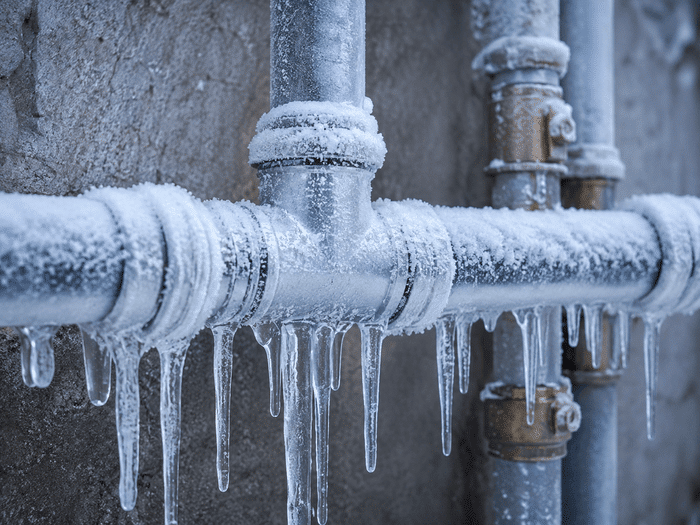
If you live in New Hampshire, you already know how cold it gets once the season turns. That cold is exactly what puts your plumbing at risk. Frozen pipes almost always come back to one thing: water sitting in a space that is not being heated. When temperatures drop and that water freezes, it expands, and a pipe can crack or burst.
Here is how our Specialists at GSMS think about frozen pipes, why they happen, and what you can do to protect your home this winter.
Why pipes freeze in New Hampshire homes
The root cause is almost always the same. When a section of pipe runs through an unheated or poorly conditioned space and we get a stretch of really cold temperatures, that pipe is vulnerable.
A few situations we see often:
- Older homes that are new to you. If you recently moved into an older house, you may not know every place a water line runs. We sometimes find pipes tucked into later additions, like a sunroom off the back, where the previous owner simply knew to keep an eye on them.
- Hydronic (boiler) heating systems that are missing glycol. If piping in a heating system was supposed to have glycol (antifreeze) added and it never was, that line can freeze up. If you are unsure about your system, our boiler services team can check whether your lines are properly protected.
In every case, it comes back to cold and a space that is not being heated.
How to prevent frozen pipes
The good news is that most freeze-ups are preventable. A few steps go a long way:
- Insulate exposed piping wherever it is practical to do so.
- Use heat tape for hard-to-reach runs. If you have piping crossing a crawl space to connect one part of the house to another, heat tape wrapped on that line can protect it. Just remember to plug it in when the cold season arrives.
- Get heat to the cold spots. If a pipe sits in a freezing section of the house, the real fix may be finding a way to bring heat to that area.
If you are not sure where your at-risk pipes are, our plumbing Specialists can walk your home with you and point out the trouble spots before winter sets in.
What to do if your pipes freeze or burst
A frozen pipe is a warning sign, and a burst pipe is an emergency. If you notice no water coming from a faucet on a cold day, or you spot water where it should not be, act quickly:
- Shut off your main water supply to limit any damage.
- Do not use an open flame to thaw a pipe.
- Call in a professional so the line can be safely thawed, inspected, and repaired. Our team handles pipe repair and replacement from small fixes to full re-pipes.
When it is an emergency like a burst pipe, we do everything we can to take care of it the same day. That is part of our Great Service Promise: when something goes wrong, we are there to help.
Protect your plumbing before the cold hits
The easiest freeze to deal with is the one that never happens. If you want peace of mind heading into winter, our Specialists can inspect your plumbing, flag vulnerable pipes, and set you up to make it through the season worry-free.