
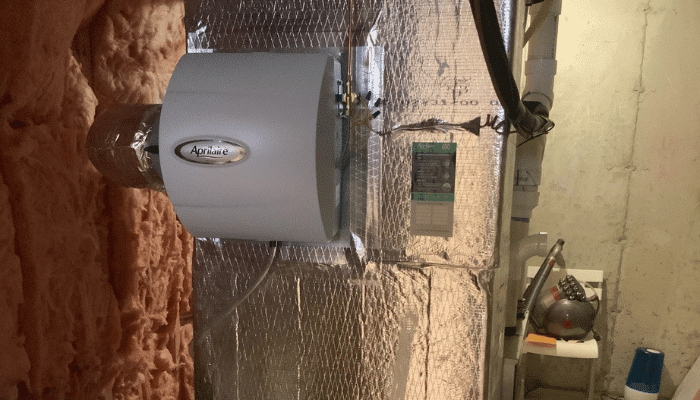
Do you even know you have a humidifier? What new homeowners should check
If you just bought a home in southern New Hampshire, there's a good chance it came with a whole-home humidifier you don't know about. It happens more than people expect: a previous owner had one installed, nobody mentioned it at closing, and it sits in the mechanical room doing nothing, or doing the wrong thing, until someone notices dry air, static shocks, or cracking woodwork come January.
Here's what to look for before your first NH winter in the house.
Where to look
Whole-home humidifiers aren't a separate appliance sitting on its own. They're built into your ductwork near the furnace or air handler, usually in a basement, utility closet, or mechanical room. Look for a rectangular unit attached directly to the ductwork, with a small water line running to it and some kind of control on the wall nearby, either a dedicated humidistat or, on newer systems, integration with a smart thermostat like an ecobee or a Lennox S40.
If you see one of these and have no idea what it does or whether it's set up correctly, that's exactly what to have checked before the dry season hits.
Check the seasonal damper
Bypass humidifiers have a manual damper, a small lever, that needs to be switched depending on the time of year. Left in the wrong position, the unit either runs when it shouldn't or does nothing at all when you actually need it. It's one of the most common reasons a humidifier "doesn't work" for a new homeowner who inherited one: it was simply never switched over for the season.
Figure out which type you have
Most systems are either a bypass humidifier or a steam humidifier, and the difference matters for how it's maintained. A bypass model uses a replaceable pad that pulls moisture from your ductwork's own airflow. A steam model has its own dedicated electrical connection and injects moisture directly into the ducts. Which one you have affects what maintenance looks like and how often it needs attention.
Why this matters for NH homes
New Hampshire winters pull moisture out of the air fast, and older NH homes, especially ones with hardwood floors, trim, or original woodwork, feel it first. Dry air also shows up as static shocks, dry skin, and irritated sinuses. If your new home has hardwood floors or built-ins you want to protect, knowing whether your humidifier is actually functioning matters more than it might seem.
Don't assume it's working
A humidifier that's installed isn't the same as one that's working. The most common issues we find in homes with an inherited system:
- The water line was connected to the cold water side instead of hot, which cuts effectiveness significantly
- A worn solenoid valve or scaled-up orifice quietly stops water flow
- The internal pad or filter is old enough that it's no longer doing much
None of these are things you can spot from across the room. If you're not sure what you're looking at, or just want confirmation that everything's set up right for the season, our Specialists can take a look during a furnace maintenance visit and let you know exactly where things stand. GSMS Home Club members get this checked automatically as part of their seasonal visit.
New to the area or new to the house? Contact us or call 603-424-8258 and we'll help you figure out what you're working with.